Use case · Use case - Revenue
Sales research & account briefing
The account’s support history, product usage, open issues, contract terms, and last three conversations are all recorded somewhere. BhogarAI assembles them into one cited brief before the call, so preparation stops competing with selling.
ROI lever
Selling time returned
Sellers spend a significant share of the week on research and preparation that produces no pipeline by itself. Returning those hours is worth measuring twice: as cost, and as the additional customer conversations the same team can hold.
Reads from
- CRM and activity history
- Support and escalation state
- Product usage and adoption
- Contracts and billing
The problem
Preparation is a research project your sellers run alone.
Everything a seller needs is in the company already - in the CRM, the ticket queue, the usage data, the contract, and a thread in the deal channel. Assembling it takes an hour, so it either happens instead of selling or does not happen at all.
Checked by hand today
- CRM records and activity
- Support tickets and escalations
- Product usage and adoption
- Contracts, pricing, and billing
- Deal channels and call notes
- Marketing engagement history
““What does my company collectively know about this account, and what changed since the last conversation?””
Account context is spread across the go-to-market stack
CRM notes, support tickets, product usage, billing, and delivery notes each hold part of the picture. Nobody has time to assemble all five before a thirty-minute call.
Sellers walk into known problems blind
An open escalation or a failed renewal conversation elsewhere in the account changes what should be said. When that context is missing, credibility is lost in the first five minutes.
Institutional knowledge leaves with the rep
When territories change, the new owner inherits a CRM record and none of the reasoning. Ramp time is spent rediscovering things the company already learned.
How Bhogar helps
How Bhogar handles sales research & account briefing
The brief is generated on demand or ahead of a calendar event, and every statement carries a source so a seller can check the detail before repeating it to a customer.
Sources
- CRM and activity history
- Support and escalation state
- Product usage and adoption
- Contracts and billing
Outcomes
- Pre-meeting account briefs
- Renewal and risk signals
- Drafted follow-ups
- CRM records kept current
Cross-system account assembly
CRM history, support state, usage trends, contract terms, and recent internal discussion are combined into one narrative rather than five tabs.
How it works →Change since last contact
The brief leads with what is different - new tickets, usage movement, personnel changes, renewal proximity - instead of restating what the seller already knows.
How it works →Grounded, cited claims only
Every statement links to its source record. Where the systems are silent, the brief says so rather than filling the gap with a plausible inference.
How it works →Written back to the CRM
Briefs, call summaries, and next steps are written back through approved tools so the record improves with use instead of decaying.
How it works →
All your data
Your own systems first. External research is optional and labelled.
The differentiated value is internal: what your company already knows and cannot assemble. Where external sources are connected, they are cited separately so a seller always knows what is verified internal fact.
CRM
Accounts, contacts, opportunities, activity history, and the notes that explain why a deal moved or stalled.
Support and success systems
Open tickets, escalation history, satisfaction signals, and the issues that will come up on the call whether you raise them or not.
Product usage
Adoption by feature, active users, usage trend, and entitlement consumption relative to what was sold.
Commercial terms
Current contract, pricing, discounts, renewal dates, and the approval history behind previous concessions.
Internal discussion
Deal channels, call summaries, and delivery notes from approved sources, so the brief reflects what colleagues actually observed.
Marketing engagement
Content consumed, events attended, and campaign responses that indicate current interest across the buying group.
Governance built in
- Territory and role permissions respected - a seller sees only the accounts they are entitled to.
- Internal facts and external research clearly separated in the brief, each with its own citations.
- Personal data handled under your existing privacy programme, with contact-level data excluded from prompts where policy requires.
- CRM writes performed through approved tools with field-level permissions, so automation cannot overwrite protected fields.
- Every brief recorded with its sources, so a claim repeated to a customer can be traced back to its origin.
The workflow
From calendar invite to updated CRM record.
The same assembly supports renewal reviews, executive briefings, and territory handovers.
A meeting appears on the calendar
The workflow starts from the calendar event or on demand from the CRM, resolving the account and the attendees.
In the portal
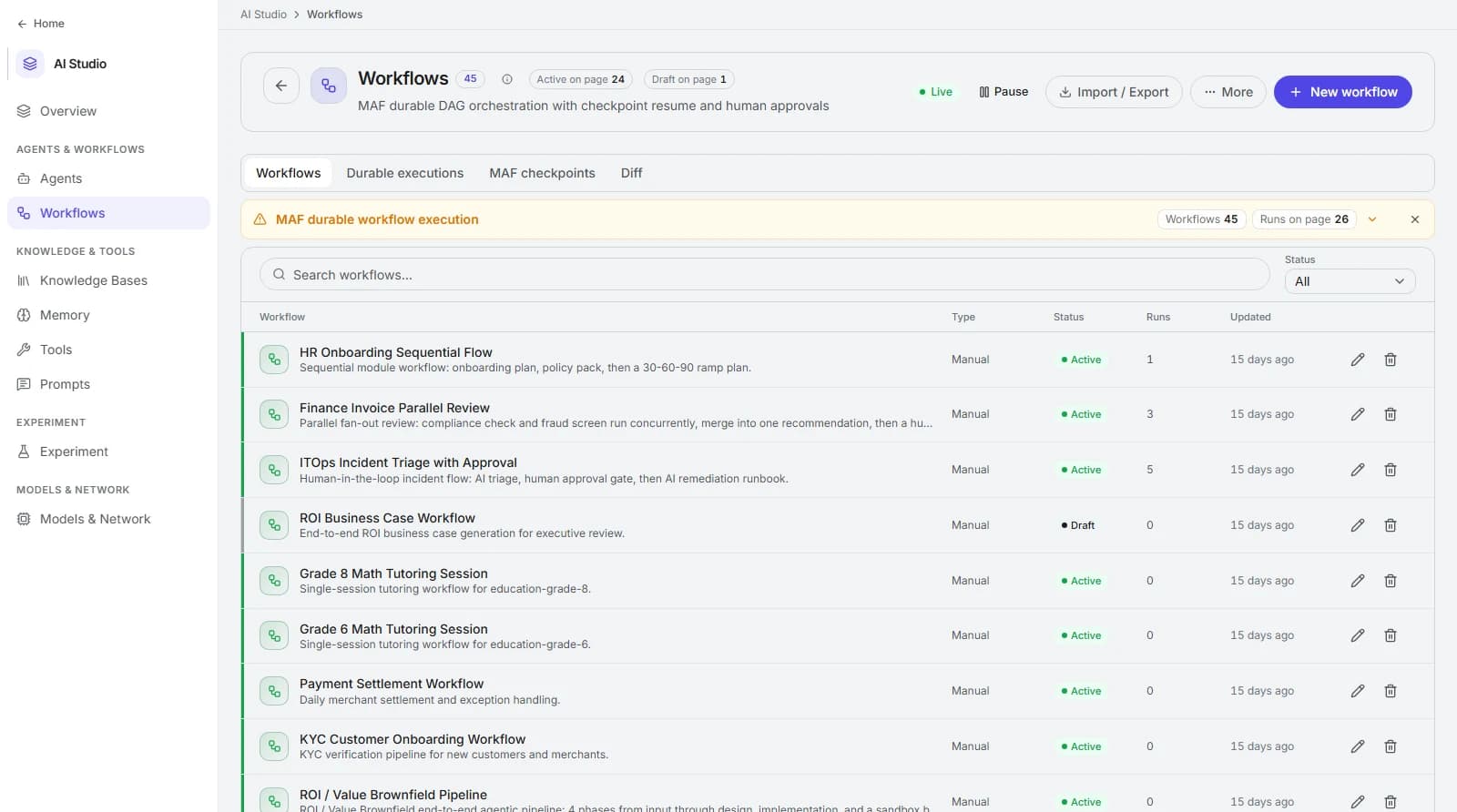
Durable workflows with approvals built in.
Multi-step processes - onboarding, invoice review, incident triage, KYC - run as checkpointed DAGs with human approval gates.
The return
Hours returned, and what the team does with them.
Baseline preparation and research time with a short time study rather than a survey. Report capacity created alongside cost saved - the two arguments persuade different executives.
Selling time returned
(baseline prep minutes − post prep minutes) × meetings ÷ 60
Report as hours per seller per week. It is the figure a sales leader can act on when planning coverage.
Meeting preparation rate
meetings with a current brief ÷ total customer meetings
Consistency is the real change. Most teams prepare well for large accounts and barely at all for the long tail.
CRM record completeness
meetings with a logged summary ÷ meetings held
Briefs that write back improve the data that produces the next brief - this compounds and is worth tracking from day one.
Ramp time for new sellers
median weeks to first closed deal
A slower-moving metric, but the clearest evidence that institutional knowledge is now transferable rather than personal.
| Dimension | Before | With Bhogar |
|---|---|---|
| Preparing for a call | Five systems opened, an hour spent, often skipped entirely. | One cited brief leading with what changed since last contact. |
| Knowing about open issues | The customer raises an escalation the seller had not seen. | Support state is in the brief before the meeting starts. |
| Territory handover | A CRM record with no reasoning behind it. | An assembled history with sources the new owner can read in an hour. |
| Post-call admin | Notes written later, or not at all. | A drafted summary and next steps approved and written back. |
FAQ
Frequently asked questions
Does this scrape the public internet for prospect research?
Can it update the CRM automatically?
How current is the brief?
What stops it inventing a detail about the account?
Keep exploring
Onboarding
Make new joiners self-sufficient faster - role-scoped answers from policy, systems, and team documentation, plus the provisioning workflow behind it.
Reporting
Turn recurring reports into a safe workflow - numbers queried from the warehouse, narrative drafted, variances explained, owner approves.
Deflection
Resolve routine customer and employee contacts at the first touch, with account context and an honest escalation when the answer is not there.
Generate a brief for a real account.
Pick one from your own pipeline and grade the output against what your team already knows - that comparison is the whole evaluation.